
Hop River State Park Trail is a walking and cycling trail stretching over 20 miles through the landscapes of eastern Connecticut. It is a rare example of a former railway corridor being converted into an extensive recreational route, accessible to anyone who wants to explore the nature, history and spirit of New England in the open air.
The modern trail allows you to travel from Manchester to Willimantic and beyond, combining flat sections with more picturesque nature, wooded segments, fields, river valleys, and traces of the former industrial era of railways. This article explores what makes the Hop River State Park Trail unique, how it came to be, what activities it offers, and why it should be included in your Connecticut travel plans.
The historical roots of the route
When you look at the Hop River State Park Trail today, it is hard to imagine that it was once part of an active railway line. More than 180 years ago, in 1849, the Hartford, Providence and Fishkill Railroad was completed, connecting Hartford and Willimantic, and later became part of the New York, New Haven & Hartford Railroad network, one of the largest railway companies in New England.
This railway saw passenger and freight trains connecting cities and towns and served as an important transport artery in the 19th and early 20th centuries. However, with the development of motorways, the advent of air transport and the decline in industrial demand for rail transport, this line gradually lost its importance. The last train ran on the line in 1970, after which the railway was abandoned.
Fortunately, the land itself remained part of the landscape, and its flat and wide structure became an excellent basis for the creation of a modern recreational trail. Over time, the abandoned tracks began to take on a new life, turning into trails for walking, cycling and horse riding. Thus, Hop River got a chance to become a place where history meets nature and modern lifestyle.
Connection to landscapes and cities: route and length
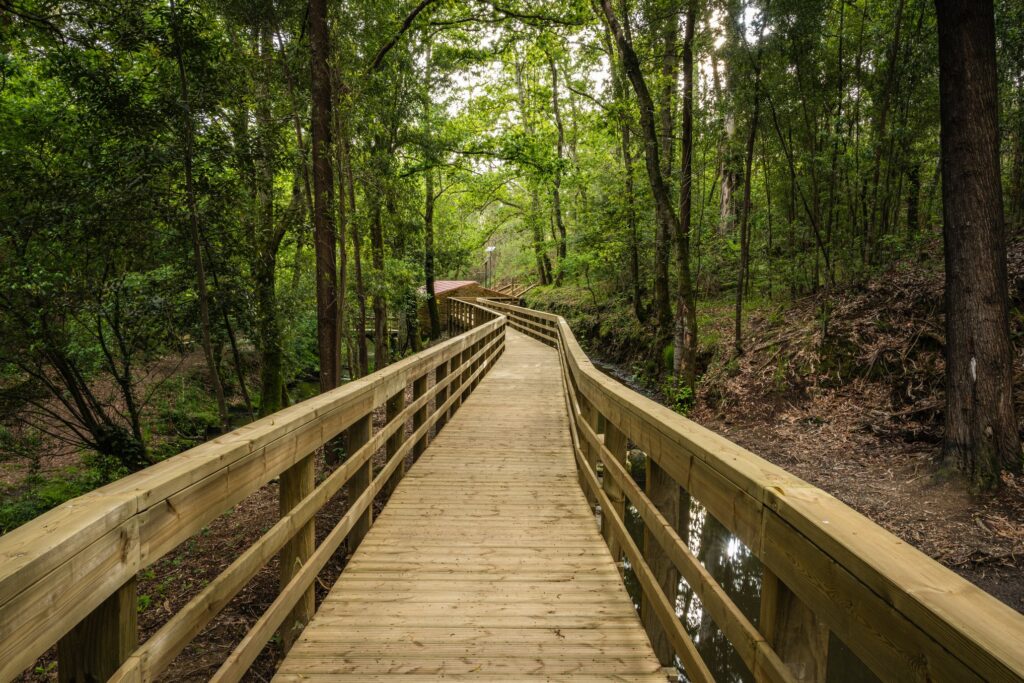
The Hop River State Park Trail stretches approximately 20.8 miles (about 33.5 km) through the eastern part of the state. Its western end begins in Manchester, near Colonial Drive, and its eastern end ends in Willimantic, where the trail connects to another major trail, the Air Line State Park Trail. The route passes through several towns and suburban areas:
- Manchester – the starting point, where the route begins near residential neighbourhoods and parks.
- Vernon – wooded areas and valley crossings.
- Bolton – the part where the trail crosses Bolton Notch State Park and plunges into deeper forests.
- Coventry and Andover – rural landscapes with fields and sparse residential buildings.
- Columbia and Windham – near water bodies and river valleys, including Hop River and Willimantic Valley.
This route allows you to enjoy different aspects of the region: suburban parks, residential areas, quiet forest landscapes, rivers and fields dotted with traces of railway history.
Natural backdrop and scenery
A distinctive feature of the Hop River State Park Trail is its close proximity to nature. Along most of its length, it runs parallel to or crosses the Hop River, offering views of tranquil riverbanks, water landscapes and gentle curves of water reflecting the green foliage.
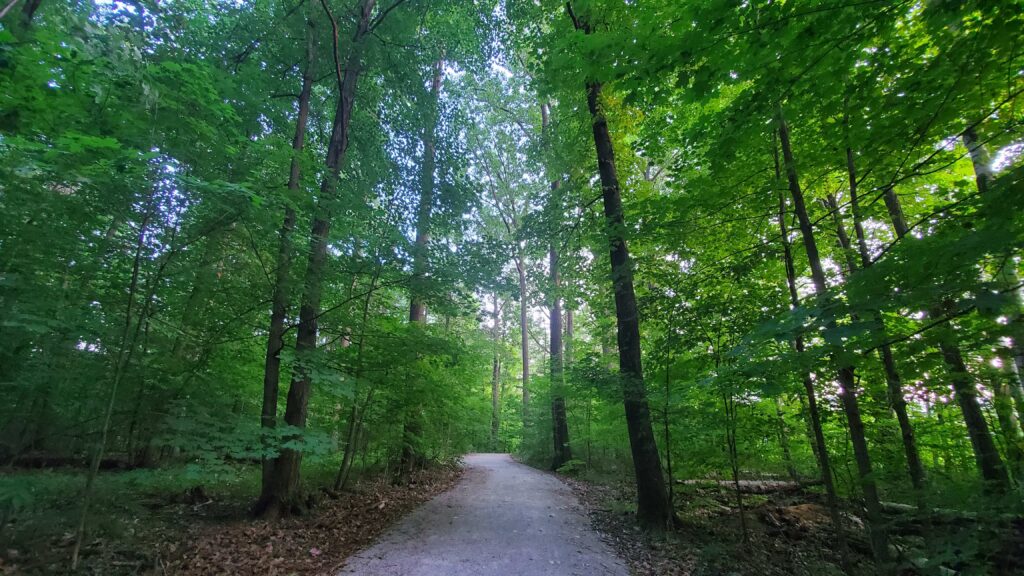
The journey winds through forests where oak and maple trees form a green canopy over the trail, especially dense in the summer months. In autumn, the trees turn fiery red and golden colours, transforming the walk into a picturesque spectacle. The wind, the rustling of leaves and the quiet shades of nature create a feeling of seclusion even near settlements.
Here you will find deep forest ditches, tunnels of greenery and the remains of abandoned railway infrastructure – fragments of old stonework, bridge supports and sections of former embankments, transformed into distinctive natural passages.
How to use sections of the route
Hop River State Park Trail is not limited to one type of activity. It is a multifunctional trail that people can use in a variety of ways:
- Walking – part of the route is suitable for leisurely walks in the fresh air, allowing you to enjoy nature away from the hustle and bustle of the city.
- Cycling – the fine gravel surface and crossings make it suitable for mountain or touring bikes.
- Horse riding – horse riding is permitted on some sections.
- Running and cross-trail running — the flat and long sections of the trail are perfect for training and long runs.
- Skiing and cross-country skiing in winter – when snow covers the ground, the trail turns into a quiet ski trail.
This range of activities makes the route versatile. You can find something to suit your taste regardless of the season and your personal preferences.
Top tips for tourists
If you want to walk part or all of the Hop River State Park Trail, there are a few things to keep in mind:
- Choose the right bike – preferably a touring or mountain bike that can easily handle rocky terrain.
- Clothing and footwear should be comfortable and suitable for possible weather changes, especially in wooded areas.
- Plan your routes so that the return trip is convenient: many trails have several access points, allowing you to finish your walk in a different place.
These simple measures will make your trip more enjoyable and allow you to fully immerse yourself in the atmosphere of the route without unnecessary everyday worries.
Conclusion
The Hop River State Park Trail combines elements of history, nature, and outdoor recreation, offering every traveller a new perspective on Connecticut. It is a place where the past meets the present, and every kilometre of the trail tells its own story about the railways, forests, rivers, and people who lived here before.
If you want to spend a day away from the hustle and bustle or make longer plans for the weekend with a bike ride and nature watching, the Hop River State Park Trail is an excellent choice. Here, every step, every turn of the trail and every view reveals something new about the region, its history and character.